Crypto ETF flows by asset
Net flow on Fri 23 Oct
0 means the funds reported and no money moved in or out. A dash means not all funds have reported yet.
Funds
Issuers
Flow reports
Blog
Live data
Latest article
Build
Reference
Quick start
GET /api/v1/flows/summary Host: api.cryptoetf.today Authorization: Bearer $KEY
Free key, 120 requests a minute, last 30 days.
Data for Fri 23 Oct · published 05:47 UTC
Expert articles and analytics on Crypto ETFs. Stay up to date with the latest market trends.
Page 5 of 9 · 82 articles
Get new articles and analytics directly to your email
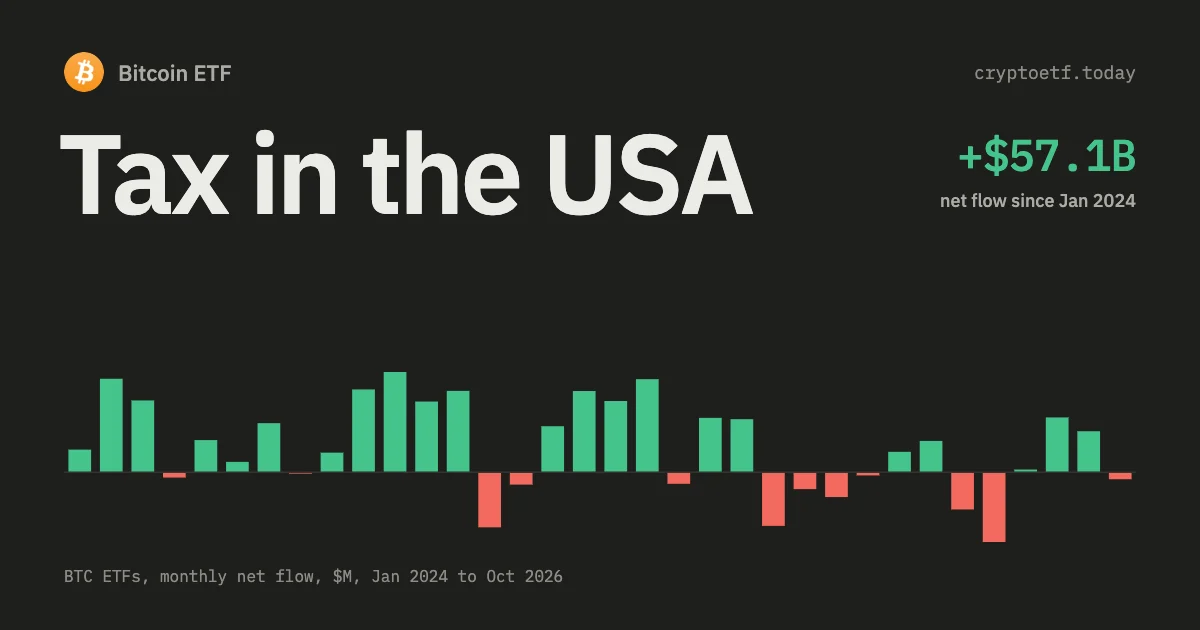
A spot Bitcoin ETF hands you a small taxable gain every year even if you never sell. Why that happens, what it costs in dollars, the 2026 rates, and how it all reaches Form 8949.
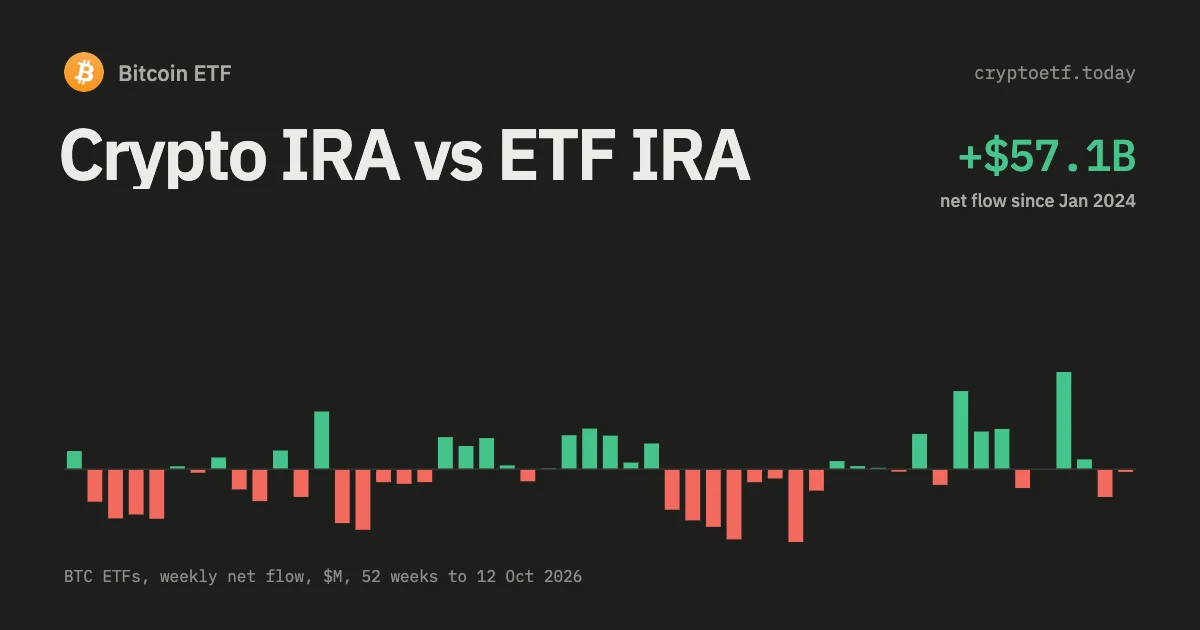
A self-directed crypto IRA holds real bitcoin and charges trading plus custody fees. A Bitcoin ETF in a normal IRA charges a published 0.15–0.25%. Here is how to compare them.
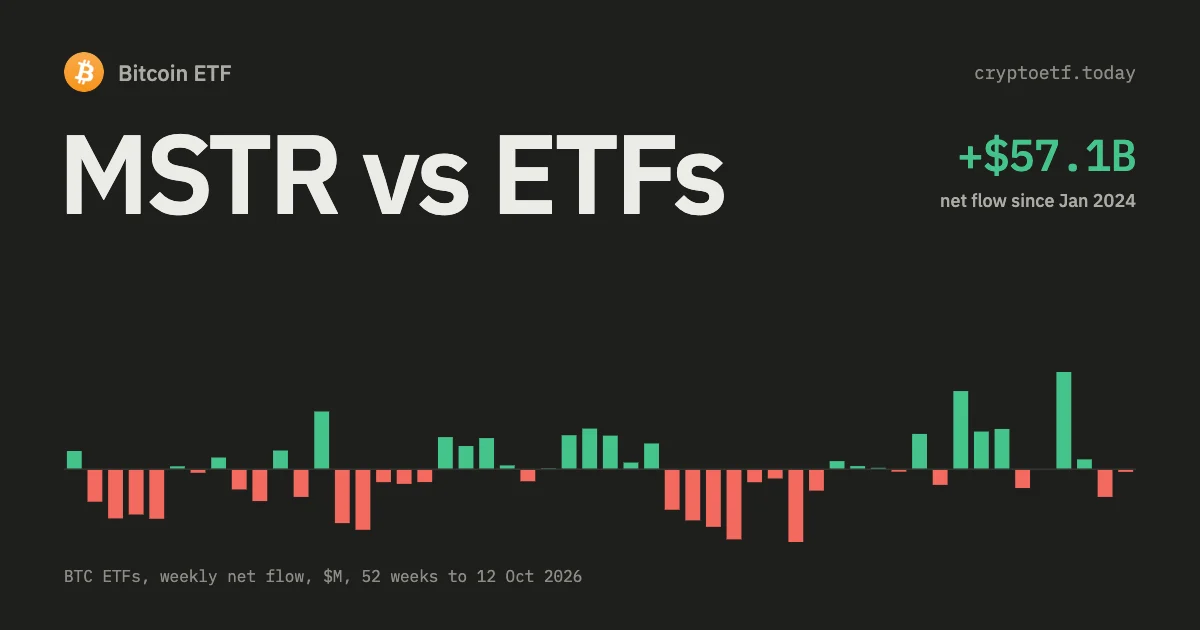
Strategy holds 846,000 BTC and trades below the market value of that bitcoin. That discount is not free money — $21bn of debt and preferred stock stands ahead of the common.
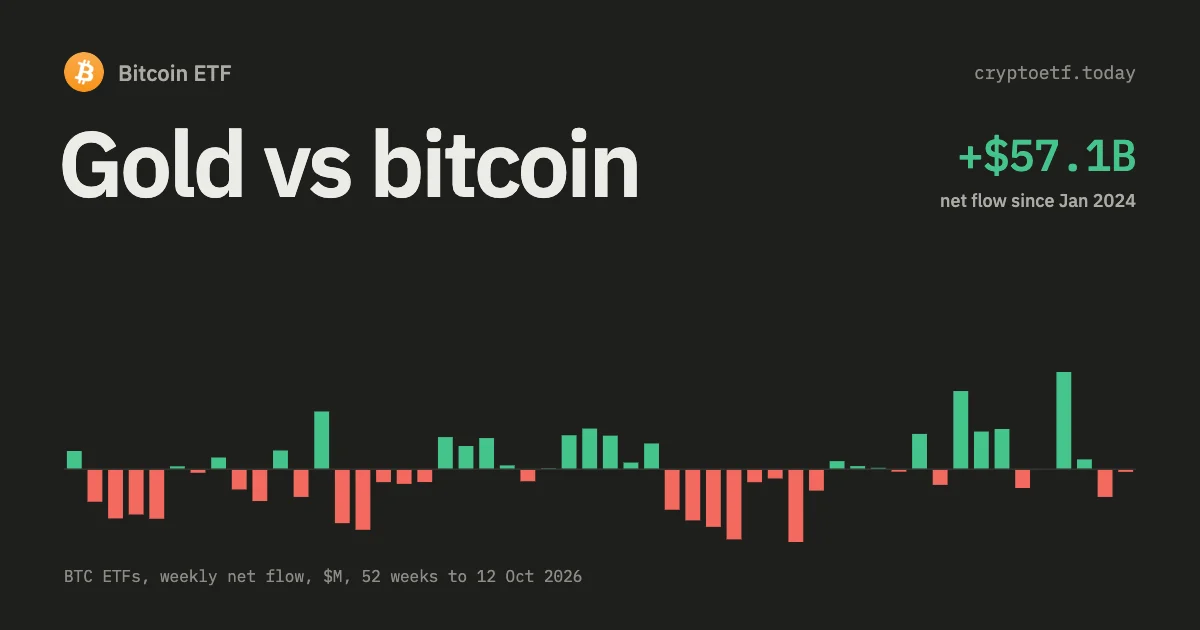
GLD, IAU, GLDM and SGOL against IBIT and FBTC on fee, size, custody and tax. Since the Bitcoin ETFs opened in January 2024, gold is up 118% and bitcoin 86%.
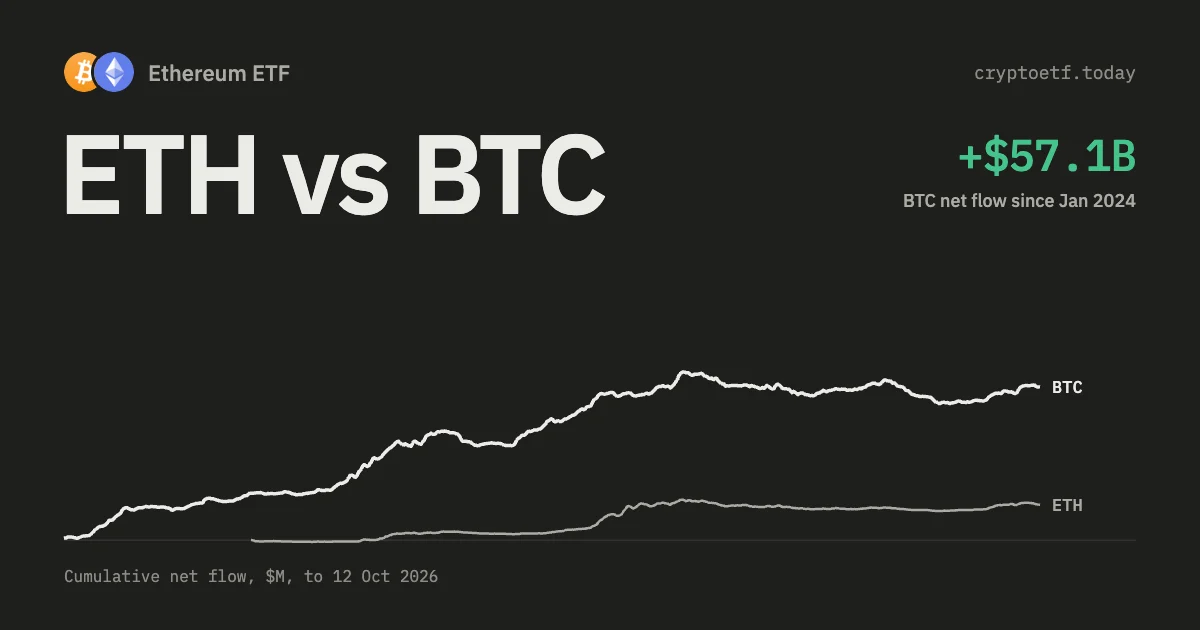
For investors who want both BTC and ETH exposure, the question is the split. Market-cap weighting says about 84/16 — and the old argument against ETH ETFs no longer holds.
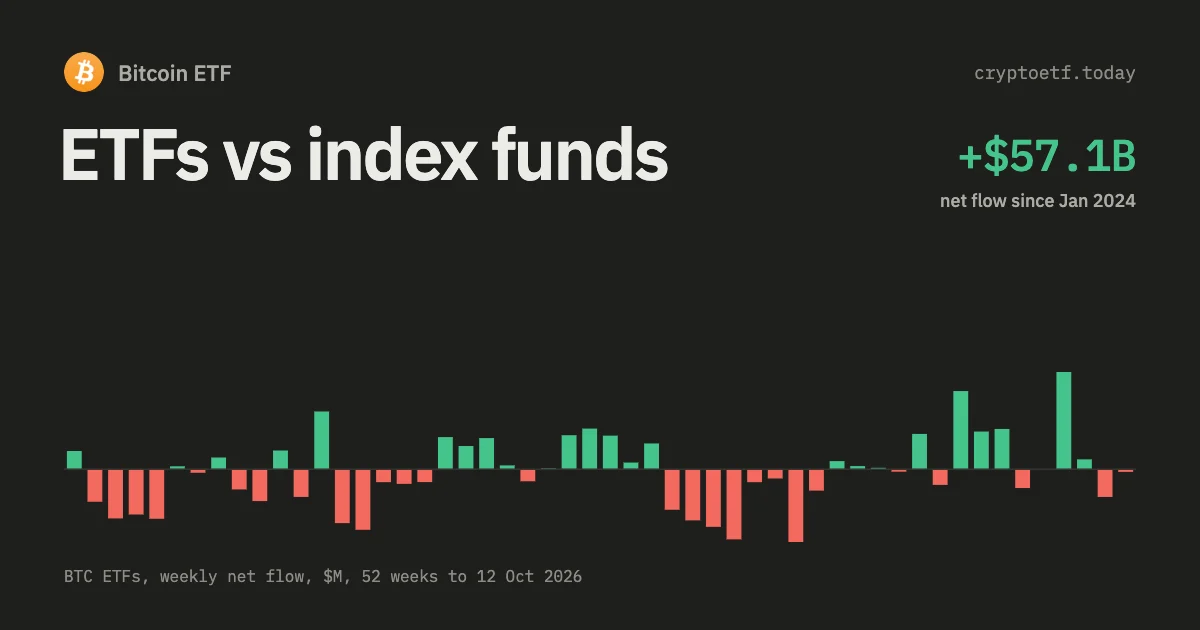
A spot Bitcoin ETF gives you BTC, full stop. A crypto index ETF holds a basket — around three-quarters of which is bitcoin anyway. Here is when each makes sense.
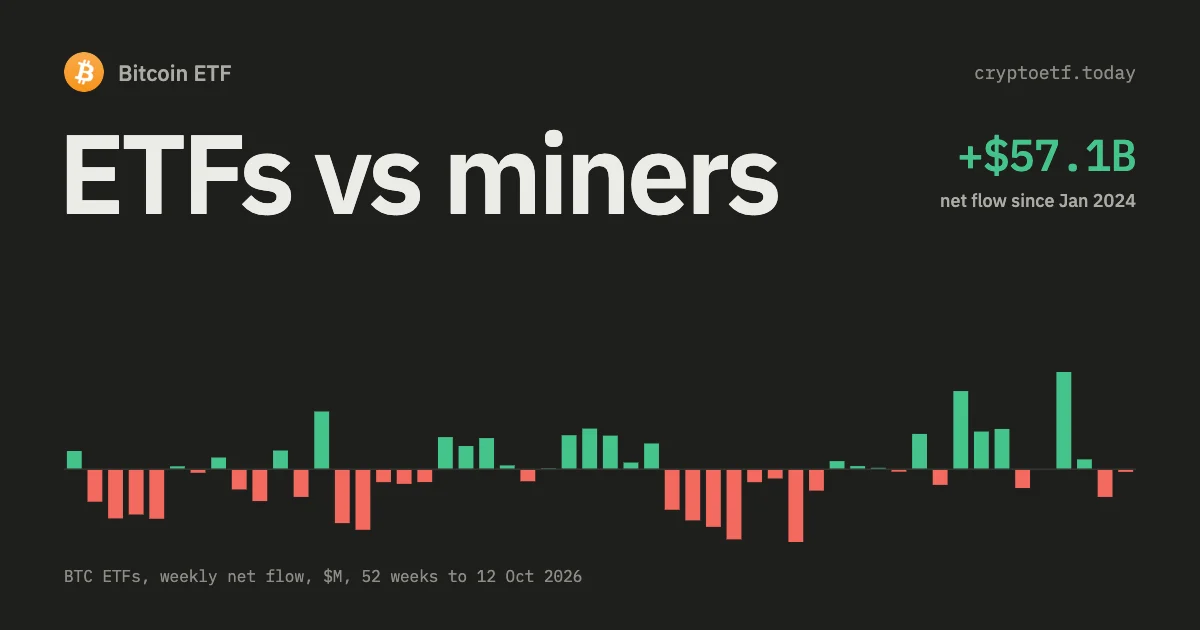
A Bitcoin ETF gives you bitcoin. A mining stock gives you an operating business whose revenue happens to be denominated in bitcoin. They are not substitutes.
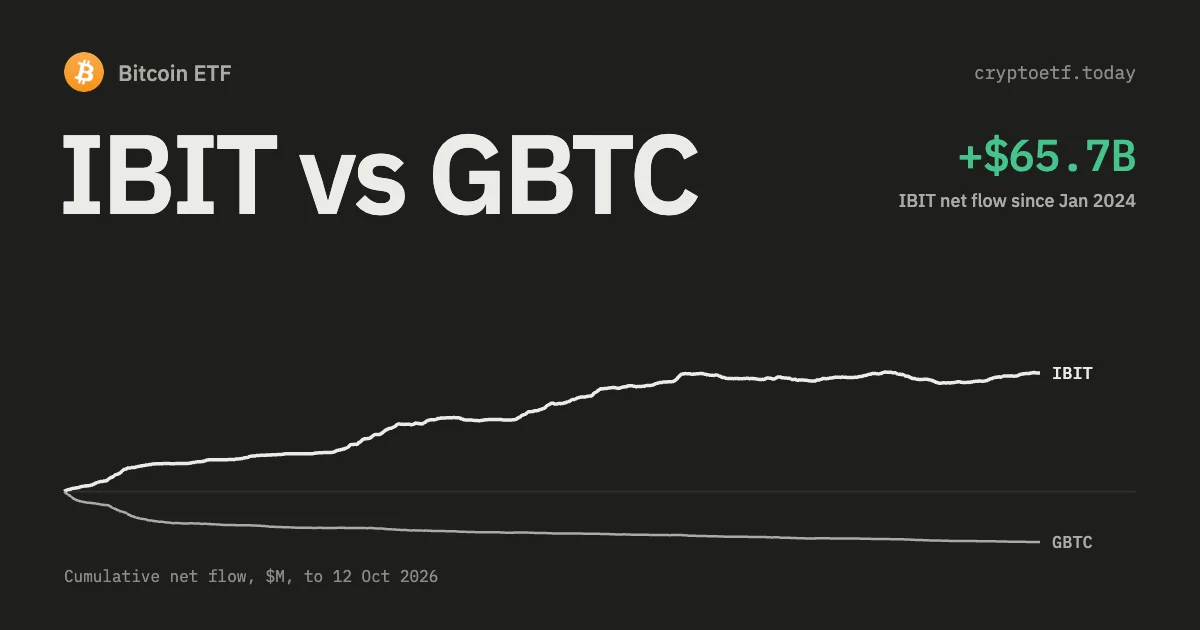
IBIT charges 0.25%; GBTC charges 1.50%. Switching saves $12,500 a year on a $1M position — unless the capital gains bill is bigger. Here is the math.
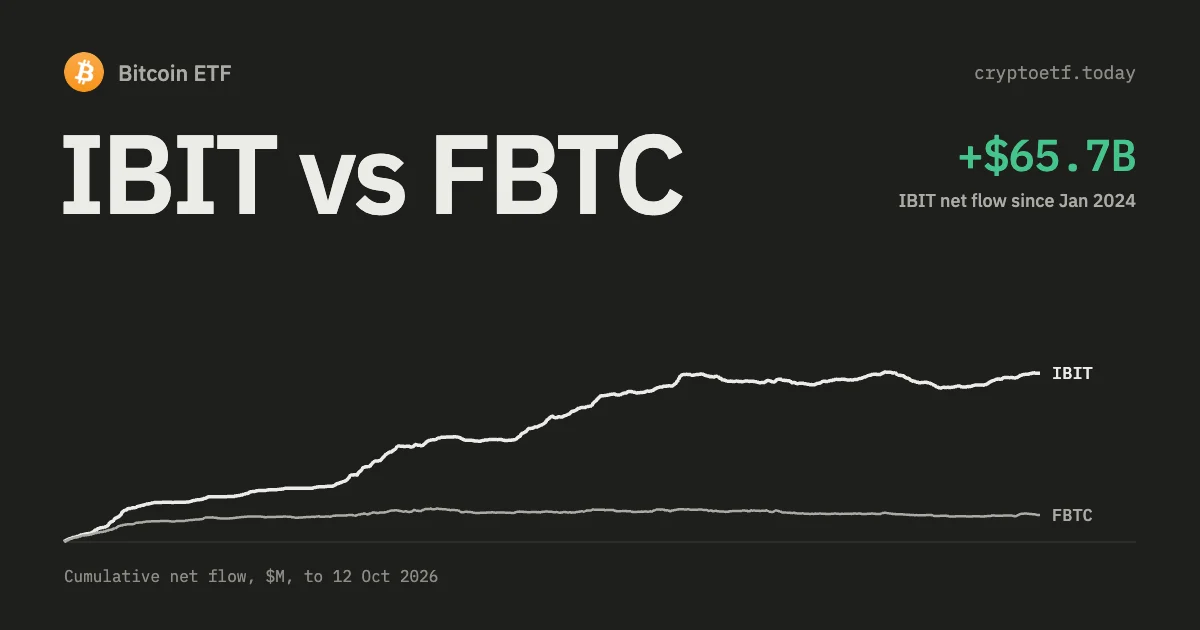
IBIT and FBTC charge the same 0.25% and give the same access. The differences that survive scrutiny are size, liquidity and custody. Here is the side-by-side.
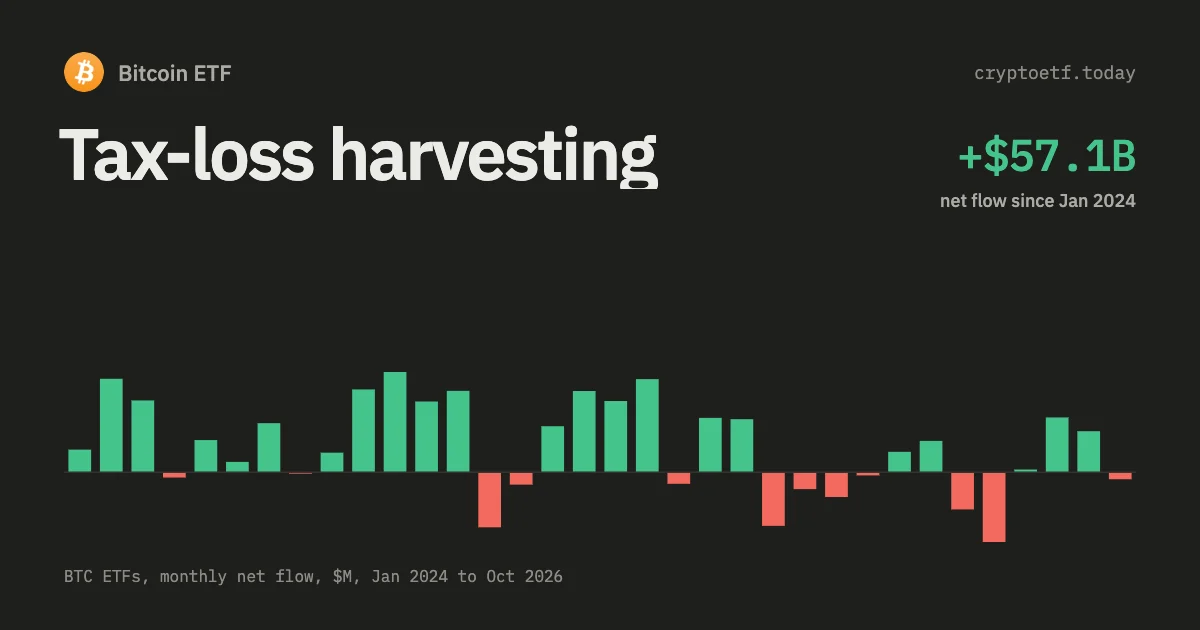
Bitcoin's volatility makes Bitcoin ETFs unusually good tax-loss-harvesting candidates. Here is the mechanics, what the wash-sale rule actually says, and why its application here is unsettled.