We pulled every Form 13F for the March 2026 quarter from the SEC. 2,023 managers reported Bitcoin ETF shares worth $19.6bn — and $14.7bn more that is options, not shares.
TL;DR. Form 13F is a quarterly disclosure that institutional investment managers with at least $100m of 13F securities must file 45 days after quarter-end. Spot Bitcoin ETFs are 13F securities, so the filings are the main public window into who owns them. We pulled the SEC's own structured data set for the quarter ended 31 March 2026: 2,023 managers reported shares in at least one US spot Bitcoin ETF, worth $19.585bn, plus a further $14.688bn of option notional that is not shares and that most "institutional holdings" headlines quietly add in. The median position is $726,000. Read 13F for breadth, not for size, and never without separating shares from options.
Contents · 9 sections

What Form 13F is
Form 13F is required by Section 13(f) of the Securities Exchange Act. The mechanics that matter:
- Filed by institutional investment managers that exercise discretion over at least $100m of "13F securities".
- It reports holdings as at the last day of the quarter, and nothing in between.
- It is due 45 days after quarter-end: Q1 filings land in mid-May, Q2 in mid-August.
- Long positions only. Short stock positions are not reported.
- Options are reported, in a separate column, at the notional value of the underlying shares — puts included.
- Everything is public on EDGAR the moment it is filed.
The options trap
This is the first thing to fix, because it is the reason most published "institutional Bitcoin ETF" numbers are wrong. Each 13F line carries a PUT/CALL flag. A blank flag means shares. "Call" or "Put" means an option position reported at the value of the underlying. Add the three together and a market maker's hedged options book turns into an apparent conviction bet.
At 31 March 2026, the gap is not subtle:
| Manager | Shares held | Option notional | Ratio quoted if you add them |
|---|---|---|---|
| Jane Street Group | $418.3m | $3,502.0m | 9× the real share position |
| Susquehanna International Group | $368.0m | $2,643.4m | 8× |
| Citadel Advisors | $52.8m | $1,484.0m | 29× |
| IMC-Chicago | $176.2m | $993.1m | 7× |
| Goldman Sachs Group | $716.2m | $888.6m | 2× |
| Two Sigma Investments | $0 | $13.4m | a position that is entirely options |
Jane Street's IBIT lines are $1.73bn of calls, $1.69bn of puts and $0.23bn of shares. Reported as "Jane Street holds $3.7bn of IBIT" it sounds like a thesis. It is an options market-maker's inventory, and the puts point the other way. Across all filers for the quarter, options notional was $14.688bn against $19.585bn of actual shares — 43% of the headline if you add everything up.
What the March 2026 filings actually show
Counting only shares, from original 13F-HR filings for the quarter ended 31 March 2026:
| Fund | Filers reporting it | Value disclosed |
|---|---|---|
| IBIT (BlackRock) | 1,524 | $12.594bn |
| FBTC (Fidelity) | 632 | $1.997bn |
| GBTC (Grayscale) | 647 | $1.593bn |
| Grayscale Bitcoin Mini | 486 | $0.812bn |
| ARKB (21Shares) | 146 | $0.786bn |
| BITB (Bitwise) | 293 | $0.727bn |
| HODL (VanEck) | 127 | $0.328bn |
| BRRR (CoinShares) | 17 | $0.373bn |
| Other four funds | 80 to 15 each | $0.375bn combined |
| All twelve, distinct filers | 2,023 | $19.585bn |
The denominator that makes this readable is IBIT's own balance sheet. Its Q1 2026 10-Q puts net assets at $53.385bn on 31 March, across 1,382,480,000 shares at a $38.62 NAV. So 13F filers accounted for $12.594bn of it — under a quarter of the fund. The rest sits with holders who never appear in this data: retail brokerage accounts, IRAs, managers below the $100m threshold, and non-US institutions.
The distribution matters more than the total. Of the 2,023 filers, 877 held more than $1m, 201 more than $10m, 36 more than $100m and nine more than $500m; exactly one crossed $1bn, and the median was $726,000. Breadth is real, depth is not.
How to read 13F data
Trend, not level
A single quarter's total tells you very little, because the filer population changes and option books swing. The useful series is the count of filers reporting a fund quarter after quarter, which is a clean adoption measure and is unaffected by price.
Separate the trading firms
Market makers and multi-strategy funds are in this data as inventory, not as investors. Jane Street, Susquehanna, Citadel, IMC and Optiver are authorised participants or options market makers; their lines move with hedging demand. The mechanics of that role are in Authorized Participants explained.
Context every headline position
A $100m allocation from a $50bn institution is 0.2% of its portfolio — visible, not meaningful at the institution level. Who the named holders actually are is in Bitcoin ETF institutional holders.
What 13F does not show
- Anything inside the quarter. A manager who bought and sold $1bn between January and March reports zero. It is a snapshot, not a flow.
- Short positions. Not reported at all, which is why a hedged book looks long.
- Managers under the threshold. Most family offices and small RIAs never file.
- Non-US institutions. Many hold US-listed Bitcoin ETFs and have no 13F obligation.
- Retail. The largest single category of ETF ownership is entirely absent from this dataset.
The 45-day lag
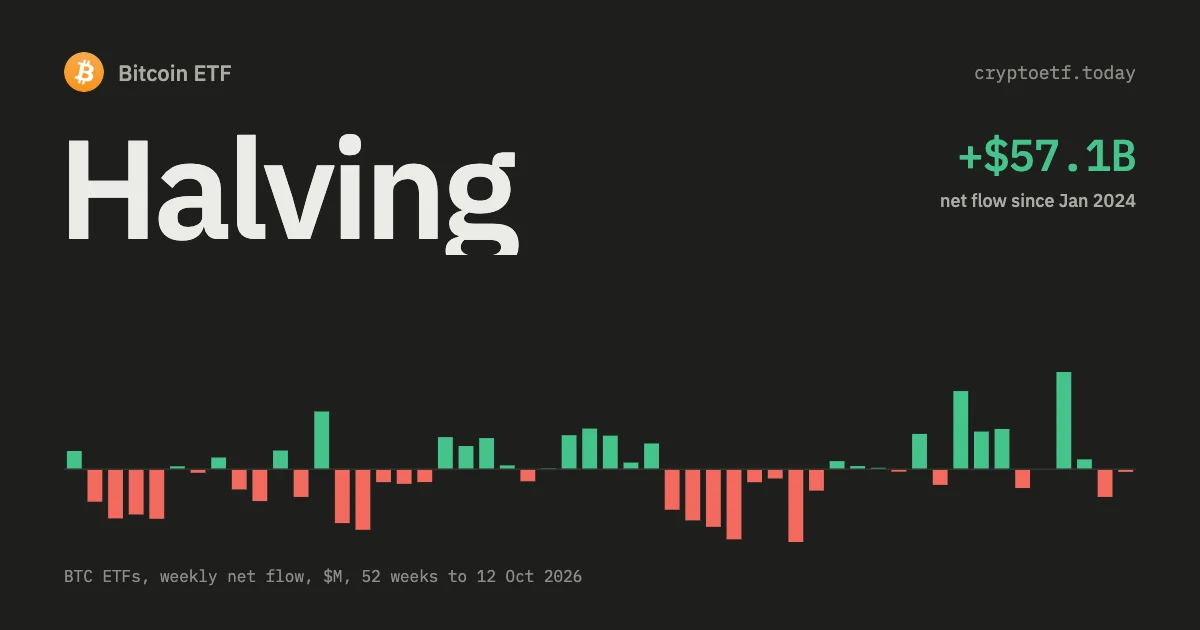
Filings appear up to 45 days after quarter-end, so the mid-May 2026 filings we used describe positions as they stood on 31 March. Everything since is invisible until the next round. For anything time-sensitive, daily creations and redemptions are the right series — see how to read Bitcoin ETF flows. Use 13F for structural adoption, never for timing.
Where to get the data
- SEC Form 13F data sets — the SEC publishes every quarter's filings as TSV tables (submission, cover page, information table). This is the only practical way to rank all filers, and it is what the numbers above come from.
- EDGAR full-text search — searching a fund's CUSIP (IBIT is 46438F101) inside form type 13F-HR returns every filer that reported it.
- Third-party aggregators — convenient, but check whether they net out puts and calls before you quote a number from one.
FAQ
What is a Form 13F?
A quarterly SEC disclosure filed by institutional investment managers with at least $100m of 13F securities under discretionary management. It lists holdings as at the last day of the quarter and is due 45 days later. Spot Bitcoin ETFs are 13F securities, so institutional holders above the threshold must disclose them.
How much of Bitcoin ETF AUM is held by 13F filers?
For the quarter ended 31 March 2026, 2,023 managers disclosed $19.585bn of shares across the twelve US spot Bitcoin ETFs. For IBIT specifically, filers accounted for $12.594bn against the fund's own reported net assets of $53.385bn — under a quarter of it. The rest is retail, IRAs, sub-threshold managers and non-US holders, none of whom file.
Why do published institutional Bitcoin ETF numbers differ so much?
Because 13F reports options at the notional value of the underlying, in the same table as shares. At 31 March 2026 filers reported $14.688bn of option notional alongside $19.585bn of shares. Jane Street's IBIT line is $1.73bn of calls and $1.69bn of puts against $0.23bn of shares; summed, it reads as a $3.7bn holding. Always check the PUT/CALL column.
Which institutions hold the most Bitcoin ETF shares?
For the March 2026 quarter the largest disclosed share positions were Millennium Management ($1,008m), Brevan Howard ($934m), Horizon Kinetics ($860m), Morgan Stanley ($758m), Goldman Sachs Group ($716m) and Mubadala ($566m). Only one filer of 2,023 was above $1bn, and the median position was $726,000.
How do I find Bitcoin ETF 13F filings myself?
Two routes. EDGAR full-text search for a fund's CUSIP restricted to form type 13F-HR returns every filer that reported it. For a full ranking, download the SEC's quarterly Form 13F data sets and join the information table to the cover page on accession number — that is how the figures in this article were produced.
Sources and further reading
- SEC, Form 13F data sets, quarter ended 31 March 2026 (filings received to 31 May 2026); original 13F-HR filings only, amendments excluded.
- SEC EDGAR, iShares Bitcoin Trust ETF Form 10-Q for the quarter ended 31 March 2026 — net assets, shares outstanding, NAV per share.
- SEC, Frequently Asked Questions About Form 13F — threshold, deadline and reporting of options.
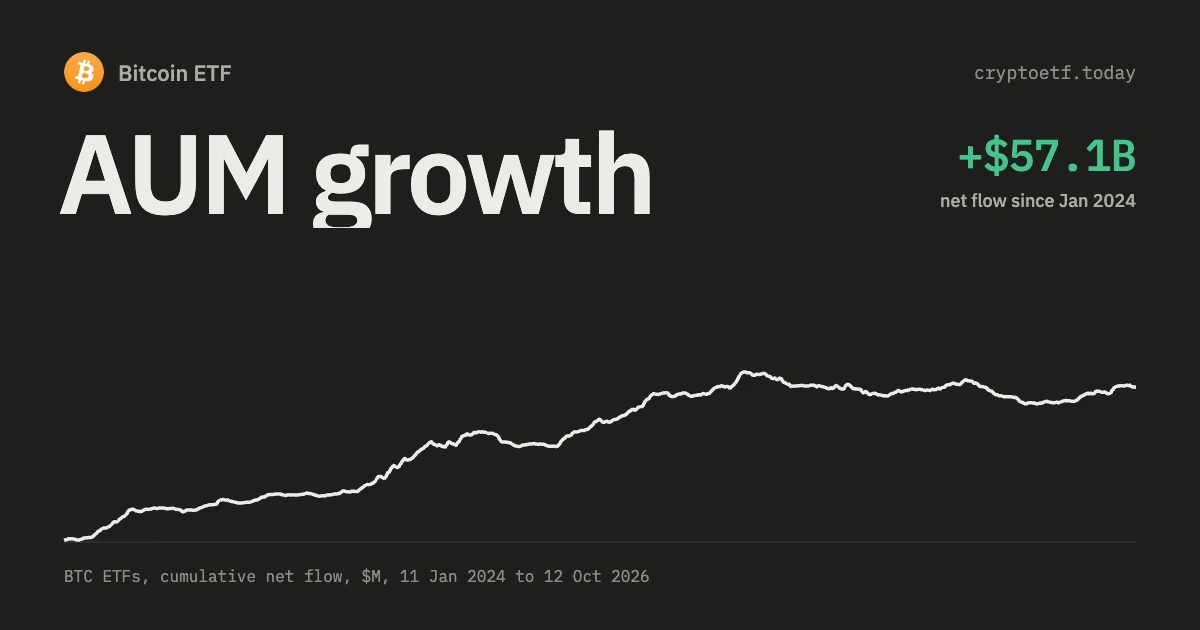
- Internal: Bitcoin ETF institutional holders, Authorized Participants explained, AUM growth analysis.
Live data on this topic
For information only. Not investment advice.


 ETH
ETH SOL
SOL XRP
XRP HYPE
HYPE LINK
LINK HBAR
HBAR AVAX
AVAX DOGE
DOGE LTC
LTC SUI
SUI DOT
DOT BNB
BNB NEAR
NEAR TRX
TRX ZEC
ZEC