
Anthropic raised $81.3B on Nasdaq. US crypto ETFs lost $5.3B in the same weeks. The charts show what really happened, why $60K matters and who is actually buying.
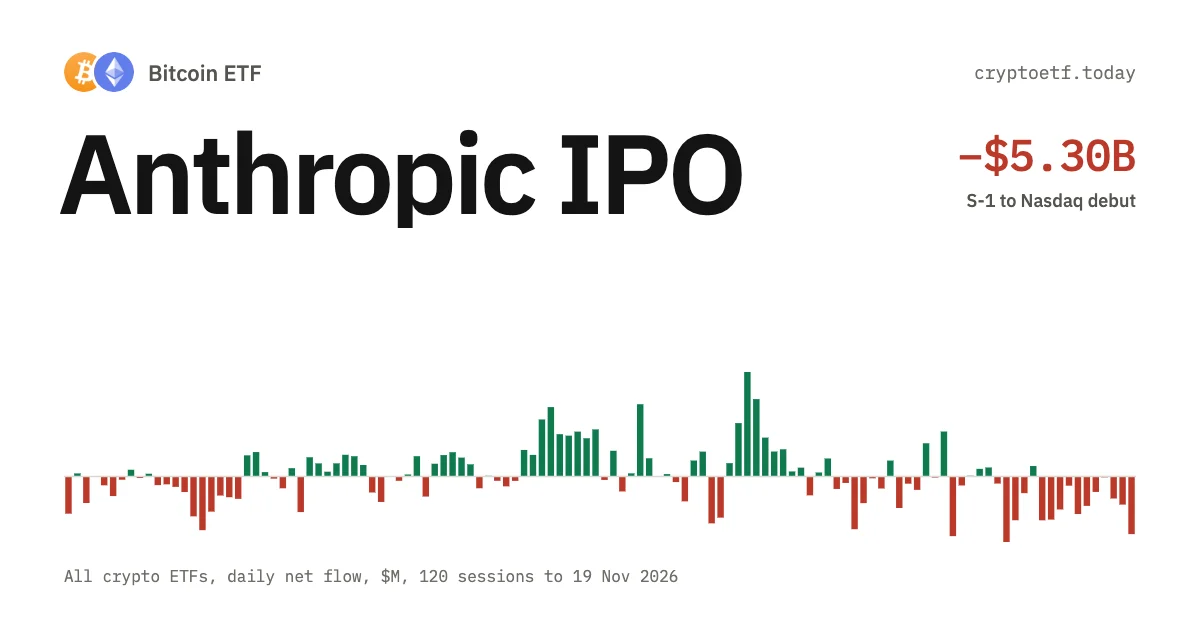
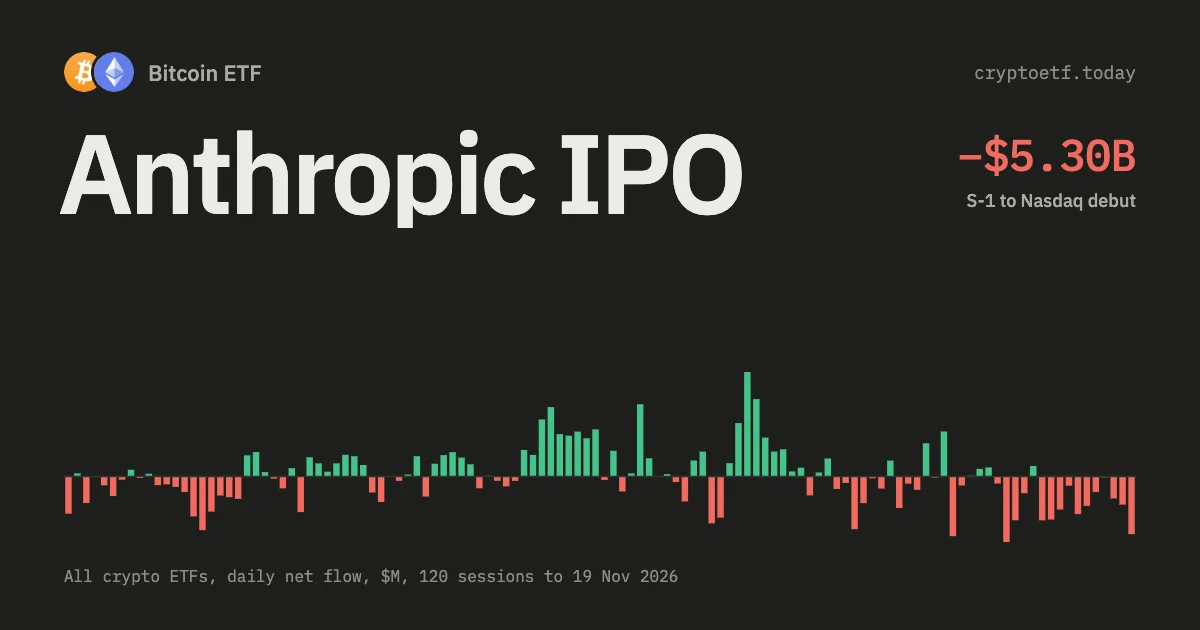
TL;DR. Anthropic’s IPO raised a record $81.3B, and in the same weeks US crypto ETFs lost −$5.30B, most of it from bitcoin funds. It’s tempting to say one paid for the other. But Nvidia fell even harder than bitcoin, so this looks less like a rotation and more like everyone cutting risk at once. Now bitcoin sits just above $60K, and the big buyers everyone talks about mostly aren’t buying.
Contents · 10 sections
The biggest IPO ever
Anthropic started trading on Nasdaq as ANT on 19 November. It sold 980 million shares at $83 and raised $81.3B, according to its final prospectus. Add a $26B private placement to chipmakers and cloud companies, and the total is $107.3B.
That’s more than every US IPO of 2025 put together. The stock closed its first day at $97.17, up 17%.
One detail crypto readers will like: before the listing, a pre-IPO perpetual futures contract on Hyperliquid traded at $96.93 on 17 November. The real first close missed that by 24 cents.
Meanwhile, money left crypto ETFs
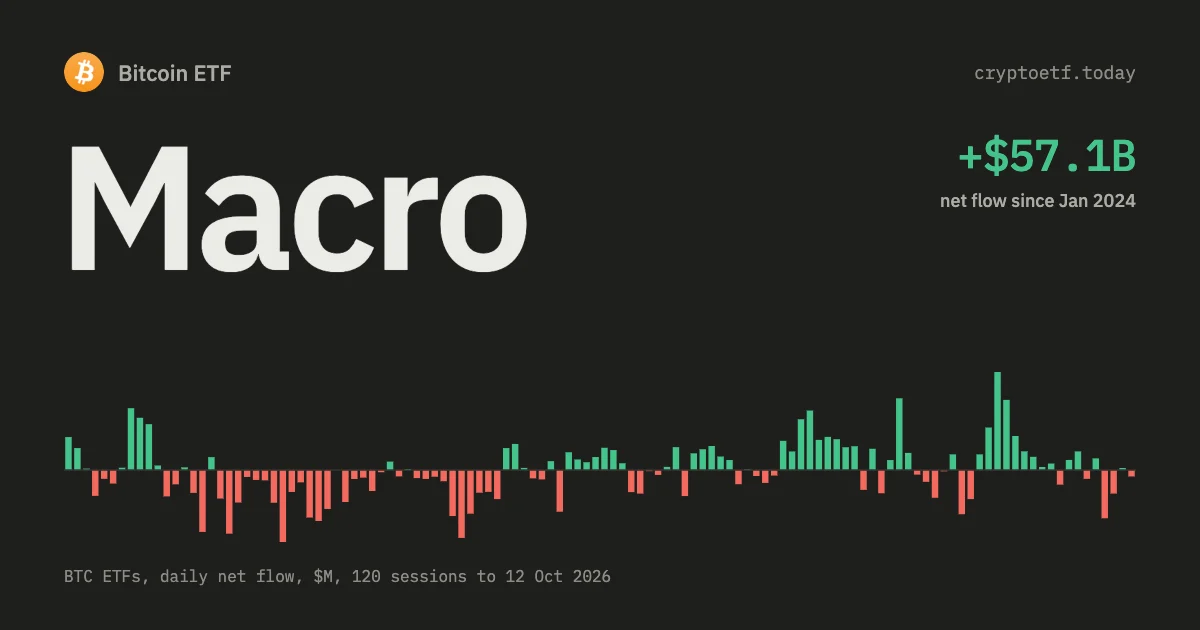
Anthropic filed its public S-1 on 26 October. From that day to the debut, US spot crypto ETFs across all 16 assets we track had 15 days of outflows out of 19. The total: −$5.30B.
The worst day was 30 October, right after the Binance hack: −$817M. Debut day came second with −$719M, and −$541M of that came out of BlackRock’s IBIT alone.
Bitcoin funds carried most of the selling, but ether ETFs lost −$1.40B too. The other fourteen assets lost −$229M between them, about half of it in Solana.
And there’s a pattern. The two worst months for crypto ETFs in over a year are June and November 2026. June is when SpaceX listed. November is Anthropic.
Before you call it proof, look at November 2025. It lost $3.76B, and nobody was listing anything big that month.
So did the money go into AI?
If people sold bitcoin to buy AI, AI stocks should have gone up. They went down. Hard.
Since 1 September, bitcoin is down about 19%. Nvidia is down 33%. Both peaked within a few weeks of each other and fell together. Block Scholes put it simply: “this time, the sell-off has been led by the AI trade itself”.
There were plenty of other reasons to sell crypto, too. Ten-year Treasury yields went above 5%, the Fed started talking about another hike, and about $6.3B was stolen from Binance on 29 October. Nobody has traced ETF redemptions into Anthropic shares, and nobody can until fund filings arrive in February.
The fair reading: the IPO soaked up a lot of cash at a moment when investors were already dumping risk. It made the outflows worse. It didn’t start them.
Jensen Huang’s exit made a bad week worse
On 12 November Nvidia announced that Jensen Huang had resigned, effective immediately. The stock opened 13% lower. Bitcoin fell below $72,000 the same morning and kept sliding to about $63,700 over the next few days.
That shows how tied together the two markets were this autumn. Block Scholes measured bitcoin’s 30-day correlation with Nvidia at 0.56, up from 0.20 at the end of September. Lacie Zhang of Bitget Wallet describes what funds did next: they cut risk across the board and held cash instead of moving into crypto.
Why $60K and $40K matter
Bitcoin has already broken through most of the levels people watched this year. ETF buyers paid $80,178 on average and are now about 23% under water (see ETF cost basis). Strategy paid $75,452. The 200-week average, around $68,000, gave way on 13 November.
$60K is where several kinds of support stack up. It’s the strike with the biggest pile of put options on Deribit, Glassnode sees the largest cluster of long liquidations there, and the level held twice this year, as Caroline Mauron of Orbit Markets points out. Lose it, and the next stops are the 2026 low near $57,800 and the realized price around $54,000.
$40K is the bad scenario. Analyst Benjamin Cowen puts his “balanced price”, a level reached only in deep capitulations, near $38,000. Others say miners’ costs start to bite in the low $40Ks. Nobody is defending that level. It’s where things could land if $60K fails.
Are Saylor and Hayes buying the fear?
That’s the story going around. The filings tell a different one.
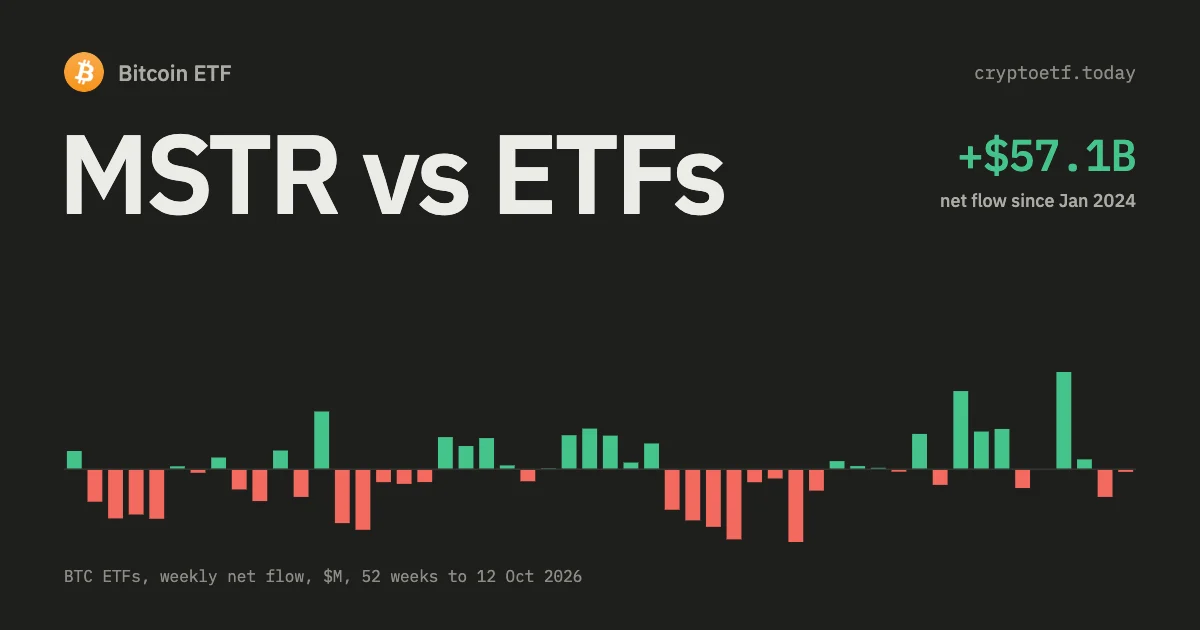
Saylor. Strategy bought 5,798 BTC from 31 August to 15 November. In the same weeks it spent about four times as much buying back its own preferred shares.
In the week of peak fear it bought just 485 BTC. And in the third quarter it sold about 5,552 BTC to pay preferred dividends and fund those buybacks. Saylor posts about buying the dip; the company mostly spends on propping up its own preferred shares. More on that in MSTR vs a bitcoin ETF.
Hayes. On 24 October Arthur Hayes said he had “dumped it all”. In his latest essay, “D is for Dilution”, he says his fund will sit on the sidelines until central banks come to the rescue. He likes falling prices because they bring that rescue closer. We found no verified bitcoin purchase.
Fear is at a one-year extreme
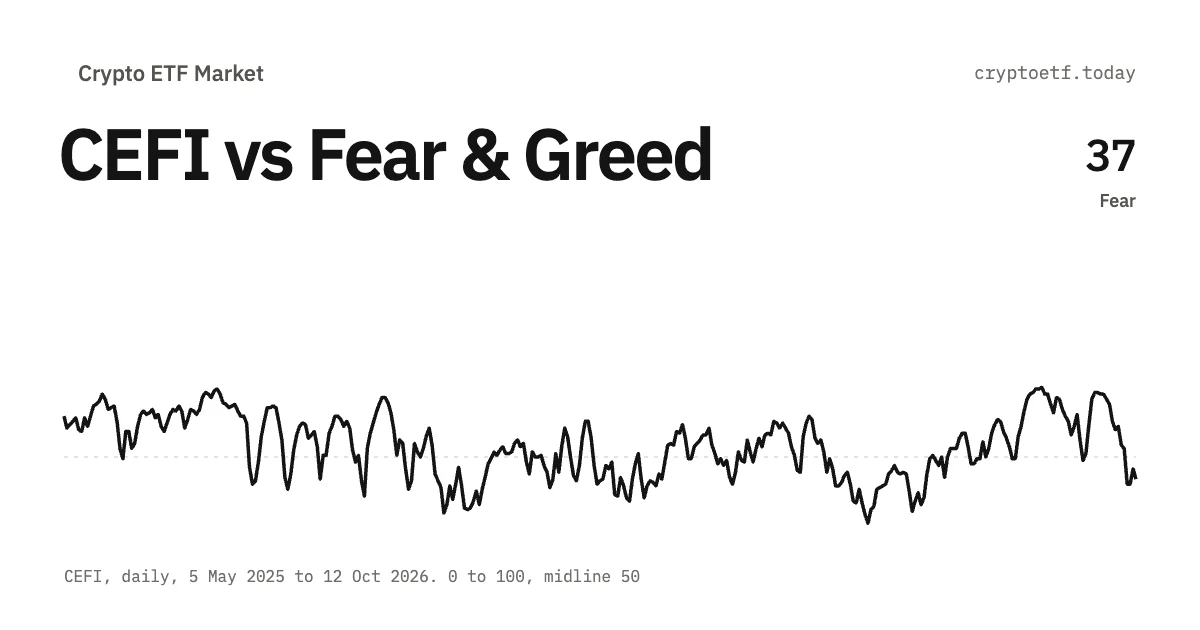
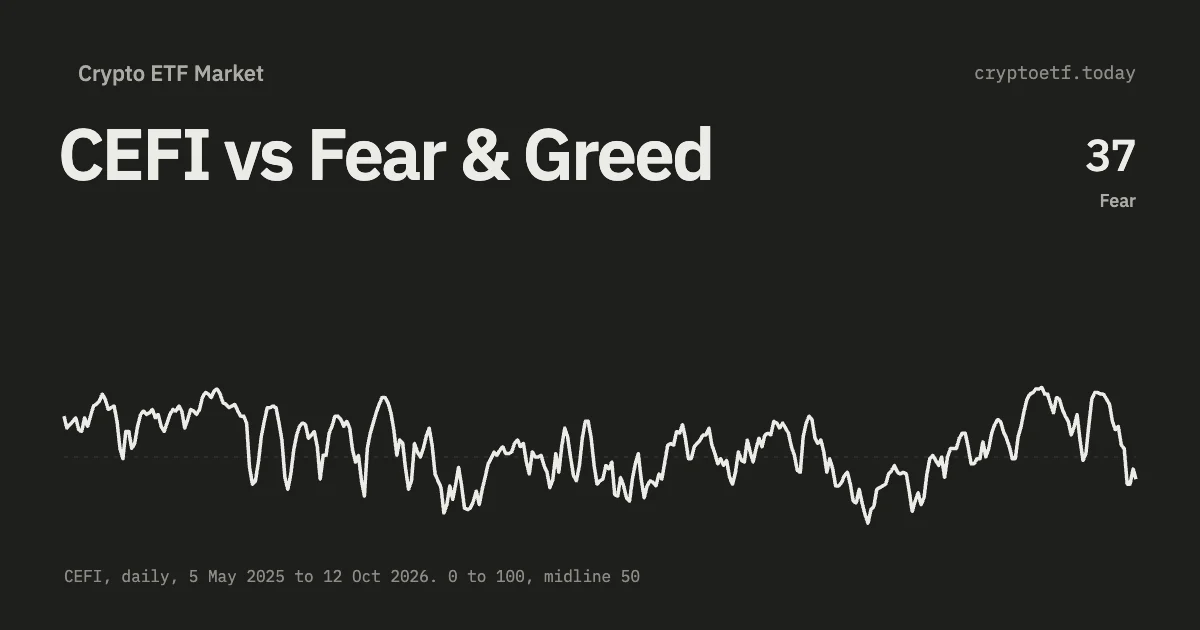
Our CEFI index reads sentiment from what ETF investors do with their money. It fell from 88 in late September to 9 on 19 November, the lowest in a year (live index, how it works).
What to watch
The IPO is done, so the rotation story now gets a real test. If ETF outflows stop in the next couple of weeks, the IPO was a one-off drain. If they keep going, it was never about Anthropic.
- $60K. A daily close below it opens the way to $54K.
- ETF flows. A few days of inflows would be the first good sign.
- 30 November. MSCI drops Strategy from its indexes.
- 8–9 December. The Fed meets.
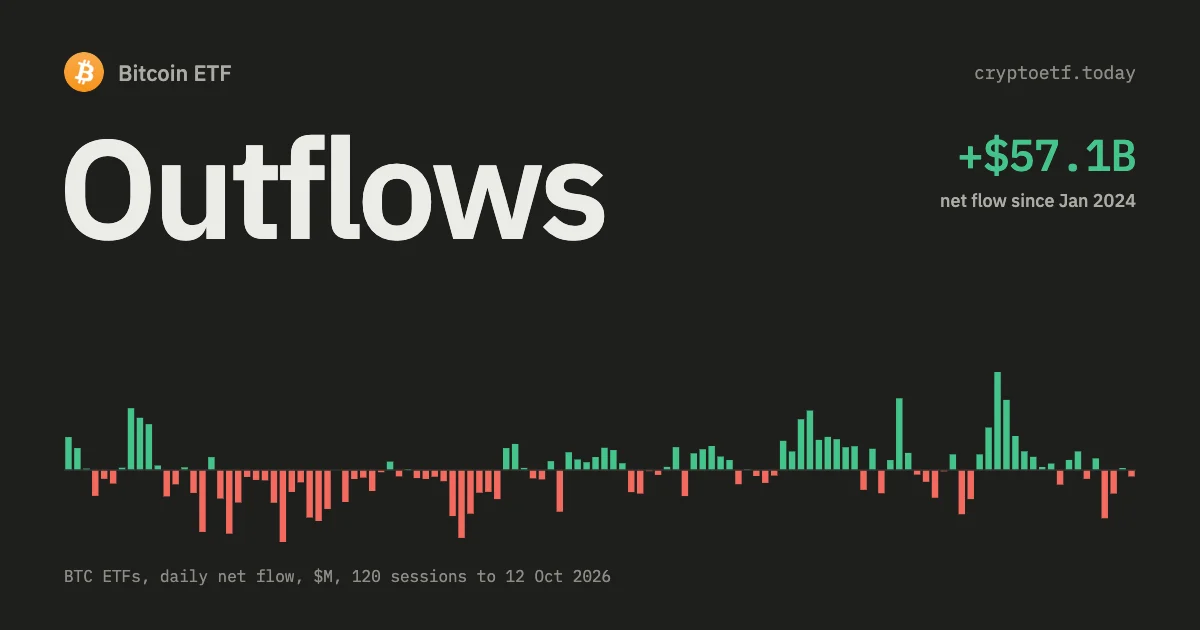
For more on reading outflows, see what bitcoin ETF outflows mean.
FAQ
How much did the Anthropic IPO raise?
$81.34B: 980 million shares at $83, according to the final prospectus. With a $26B private placement to AMD, Broadcom, Google, Micron, Microsoft, Nvidia and TSMC, the total is $107.3B. Shares trade on Nasdaq as ANT.
Did the Anthropic IPO cause bitcoin to fall?
Not on its own. US crypto ETFs lost $5.30B between the S-1 and the debut, $3.67B of it from bitcoin funds, but AI stocks fell too: Nvidia dropped 39% from its October high, more than bitcoin. Rising yields and the Binance hack weighed on crypto at the same time.
Why is $60,000 important for bitcoin?
It has the largest put open interest on Deribit, the biggest cluster of long liquidations, and it held twice in 2026. Most other support levels, like the ETF buyers’ average price of $80,178, are already above the market.
Is Michael Saylor buying the bitcoin dip?
Only a little. Strategy bought 5,798 BTC from 31 August to 15 November 2026 and spent about four times more on buying back its STRC preferred shares. It also sold about 5,552 BTC in the third quarter.
Sources and further reading
- Anthropic, PBC: final prospectus, Form 424B4 (19 November 2026), sec.gov.
- Strategy Inc.: Form 8-K (16 November 2026), sec.gov; third-quarter results, sec.gov.
- Nvidia: CEO transition (12 November 2026), nvidianews.nvidia.com.
- Arthur Hayes, “D is for Dilution” (5 November 2026), cryptohayes.substack.com.
- On cryptoetf.today: bitcoin ETF flows, ETF cost basis, CEFI index.
Live data on this topic
ETFs still waiting for approval: Injective, SEI, Cronos, PEPE, Worldcoin, Canton, Aave, TRUMP, Ondo, Uniswap, Aptos, PENGU
For information only. Not investment advice.
 BTC
 ETH
 SOL
 XRP
 HYPE
 LINK
 HBAR
 AVAX
 DOGE
 LTC
 SUI
 DOT
 BNB
 NEAR
 TRX
 ZEC