
Tokenized Treasury funds held $14.4bn on 25 November 2026, and five products made up 61% of it. BUIDL averages $14m per wallet, USDY $110K. Over 30 days the segment lost $1.27bn.
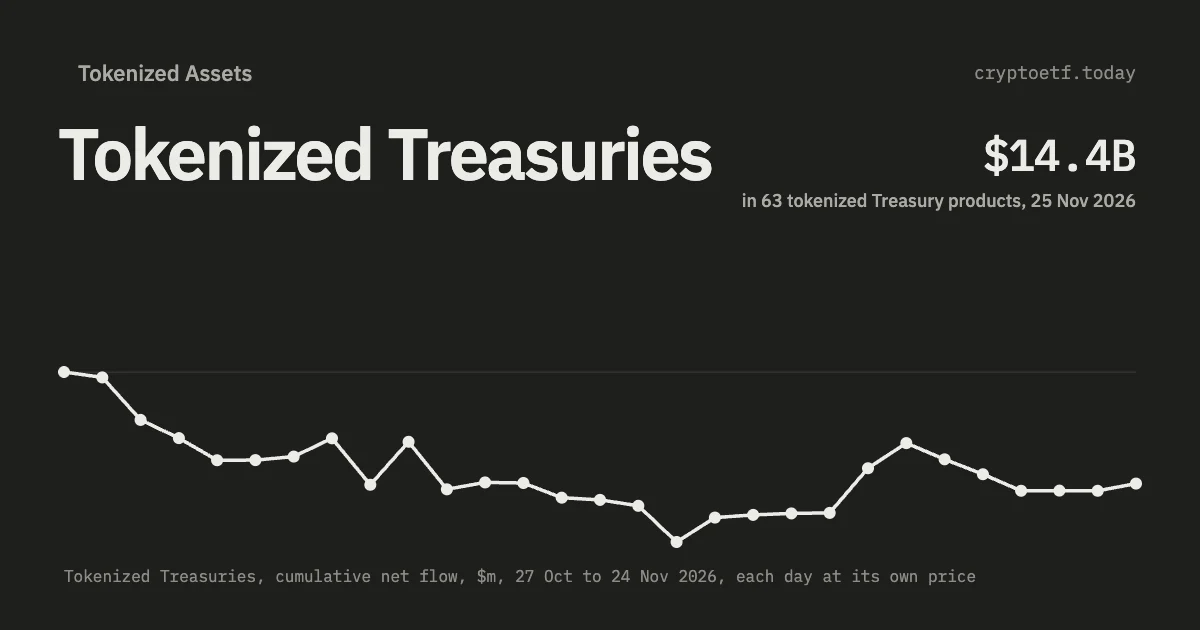
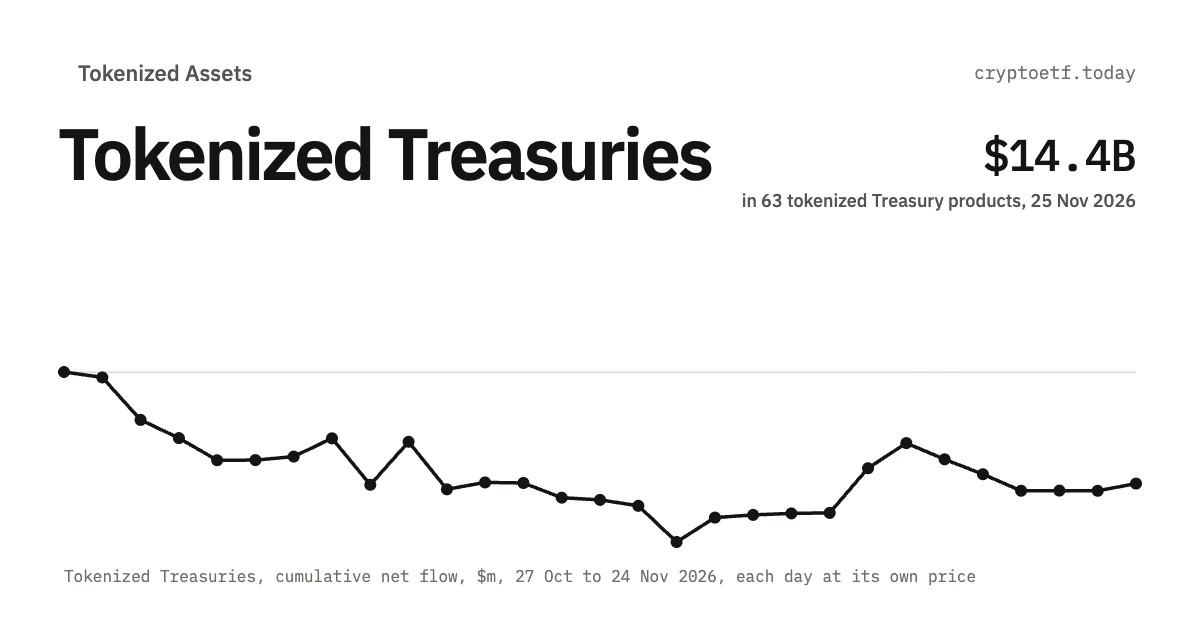
TL;DR. A tokenized Treasury is a share of a fund (or a note) that owns short-term US government debt, recorded as a token on a public blockchain. Most are a tokenized money market fund under another name. On 25 November 2026 we counted 63 such products worth $14.40bn. Five of them, Ondo’s USDY, Circle’s USYC, Franklin Templeton’s iBENJI and BENJI, and BlackRock’s BUIDL, make up 61% of that. Most are institutional: BUIDL had 93 wallet addresses, an average of $14.1m each. The exception is USDY, with 21,632 addresses and about $110K per address. Over the last 30 days the segment had net outflows of $1.27bn, almost half of it from BUIDL.
Contents · 10 sections
- What a tokenized Treasury is
- How it differs from a stablecoin
- The largest tokenized Treasury funds right now
- BlackRock’s BUIDL fund, BENJI and USDY: who can buy
- Holders and value per address
- Why $1.27bn left in 30 days
- The same firms run Bitcoin ETFs
- Tokenized Treasury fund or T-bill ETF?
- FAQ
- Sources and further reading
What a tokenized Treasury is
Strip away the word “token” and most of these products are something old: a money market fund or a short-term bond fund holding tokenized Treasury bills. The fund buys T-bills and repurchase agreements backed by Treasuries, collects the interest and passes it on. What changes is the shareholder register: ownership is written to a blockchain such as Ethereum, Stellar or Solana, and a share can move between wallets the way a stablecoin does.
Among the big fund managers, Franklin Templeton was first, by its own account. Its Franklin OnChain U.S. Government Money Fund (ticker FOBXX) started on 6 April 2021, and each share of the fund is represented by one BENJI token. Franklin calls it the first US-registered tokenized money market fund. BlackRock followed on 20 March 2024 with the BlackRock USD Institutional Digital Liquidity Fund, BUIDL, issued on Ethereum through Securitize.
The yield still comes from the US Treasury, so it moves with the Federal Reserve’s rates. And the fund still sits inside the regulated system: there’s a sponsor, a custodian, an auditor and a list of who is allowed to buy.
How it differs from a stablecoin
Both are dollar-sized tokens backed by Treasuries. A dollar stablecoin like USDT or USDC is meant to stay at exactly $1.00 and pays holders nothing; a tokenized Treasury fund passes the interest on, either by raising the price of the token or by issuing new tokens. BUIDL does the second: its dividends accrue daily and are paid out once a month as new tokens, according to BlackRock’s launch release. We go through stablecoin reserves and who earns their income in What Is a Stablecoin.
Products that pass yield to holders are generally structured as securities, and securities come with investor checks. You can’t buy BUIDL with a wallet and a credit card. The stablecoin side of the market is much bigger: we track 58 stablecoins worth $281.8bn, almost 20 times the Treasury segment (see the stablecoin dashboard).
The largest tokenized Treasury funds right now
Here are the ten largest US Treasury products in our data, by value on 25 November 2026. Value is the number of tokens in circulation times the token’s price. “Addresses” is the number of wallets that held the token on any chain. Our data also files Spiko’s EUTBL ($468m) under Treasuries, but Spiko says that fund invests in Treasury bills from core eurozone countries, so it is left out here.
| Token | Issuer | Value | Addresses | Value per address | 30-day flow |
|---|---|---|---|---|---|
| USDY | Ondo Finance | $2.38bn | 21,632 | $110K | +$170m |
| USYC | Circle (Hashnote) | $2.12bn | 29 | $73.0m | −$265m |
| iBENJI | Franklin Templeton | $1.65bn | 50 | $32.9m | −$67m |
| BENJI | Franklin Templeton | $1.38bn | 1,040 | $1.33m | −$161m |
| BUIDL | BlackRock | $1.31bn | 93 | $14.1m | −$617m |
| JLTXX | J.P. Morgan Asset Management | $727m | 8 | $90.9m | −$65m |
| WTGXX | WisdomTree | $659m | 79 | $8.3m | −$86m |
| CUMIU | China Asset Management | $506m | 1 | $506m | −$51m |
| USTB | Superstate | $479m | 95 | $5.0m | −$51m |
| SWEEP | State Street Investment Management | $455m | 6 | $75.8m | +$170m |
Just outside the ten sit Ondo Global Markets’ SHVon ($411m) and Ondo’s second fund, OUSG ($315m, 58 addresses). By issuer the picture is even more concentrated. Franklin Templeton runs four products worth $3.32bn together, Ondo Finance two (USDY and OUSG) worth about $2.7bn, Circle one worth $2.12bn and BlackRock three worth $1.60bn. Those four firms hold 68% of the segment. The live version of this table, with every product and chain, is on the tokenized Treasuries page.
BlackRock’s BUIDL fund, BENJI and USDY: who can buy
The tokens look alike on a block explorer, but the legal form decides who can own one.
| BUIDL | BENJI (FOBXX) | USDY | |
|---|---|---|---|
| What it is | Private fund | US-registered money market fund | Tokenized note |
| Started | 20 March 2024 | 6 April 2021 | Launched 3 August 2023 |
| Who can buy | Qualified purchasers, under Rule 506(c) and Section 3(c)(7) | Investors onboarded through Franklin’s Benji app or institutional portal | Non-US individuals and institutions; not offered to US persons |
| Minimum | $5 million in BlackRock’s launch release; $100,000 in the fund’s SEC Form D | $20 for most accounts (current prospectus) | No general minimum published; $5,000 to mint or redeem on Sui and Stellar |
| How income is paid | Accrued daily, paid monthly as new tokens | Money market fund dividends | Token price rises as yield accrues; 5% APY at launch |
| Backing | Cash, Treasury bills, repo | At least 99.5% in government securities, cash and repo | Short-term Treasuries, shares of a short Treasury ETF or bank deposits, depending on issue date (a 3% first-loss cushion at launch) |
The minimum for BUIDL depends on which document you read. BlackRock’s 2024 launch release set a $5 million initial minimum; the fund’s Form D filed with the SEC lists $100,000 as the minimum investment accepted. Either way, the qualified-purchaser test leaves a small circle of buyers: funds, crypto firms and other protocols. BENJI is the opposite case: its summary prospectus sets $20 for most accounts, and Franklin sells it through its own app.
USDY was designed as a note for people outside the US. Ondo’s launch post called it a tokenized note secured by short-term US Treasuries and bank deposits, not offered to US persons. Ondo USDY LLC issued it first; since 15 December 2025 USDY has sat under Ondo Global Markets (BVI) Limited, the issuer behind Ondo’s tokenized stocks, according to the USDY documentation. Ondo publishes no general minimum for minting with USDC (only $5,000 on Sui and Stellar, and bank wires from $100K), and the token also trades on the open market, so it ended up with 81% of every holder address in the segment. The company’s full product line, OUSG included, is covered in Ondo Finance explained.
Holders and value per address
Value per address is a rough measure. One investor can use several wallets, and one address can stand for many people when it belongs to a custodian, an exchange or a pooling contract. SHVon ($411m) and CUMIU ($506m) each showed a single holder address, almost certainly a contract or custody account.
Leave those two aside and the range still runs from $110K per address in USDY to $90.9m in JLTXX, more than 800 times higher. SWEEP averages $75.8m across 6 addresses. BENJI, the oldest product, sits at $1.33m. Three groups come out of it:
- Treasury management for crypto firms. USYC, BUIDL and JLTXX hold billions in a few dozen wallets: firms parking cash between trades, or protocols holding reserves.
- Wealth and advisory clients. BENJI has over a thousand holders and is sold through Franklin’s own app.
- Non-US savers. USDY is the only top-ten product where the typical position looks like a private person’s savings.
None of the ten is a mass retail product in the American sense. A US individual who wants Treasury yield in a brokerage account still buys a T-bill ETF or a money market fund the ordinary way.
Why $1.27bn left in 30 days
In the 30 days to 25 November, tokens redeemed exceeded tokens issued by $1.27bn at current prices. That is 8% of where the segment started. Four products account for more than all of it:
- BUIDL: −$617m, from about $1.93bn to $1.31bn, a 32% drop.
- JTRSY, the Janus Henderson fund issued through Anemoy and Centrifuge: −$302m, from $344m to $42m, an 88% drop.
- USYC: −$265m, an 11% drop.
- BENJI: −$161m, with $165m leaving in the last seven days alone.
Money did come in elsewhere. State Street’s SWEEP added +$170m, USDY +$170m and SHVon +$99m.
The chain data shows that money moved. It doesn’t show why, and we won’t guess. It does show how few holders it takes to move the total: those four products lost $1.35bn between them, 106% of the segment’s net outflow, and JTRSY had only 27 addresses left at the end. When a headline says tokenized Treasuries fell by a billion dollars, check which products did the falling.
The same firms run Bitcoin ETFs
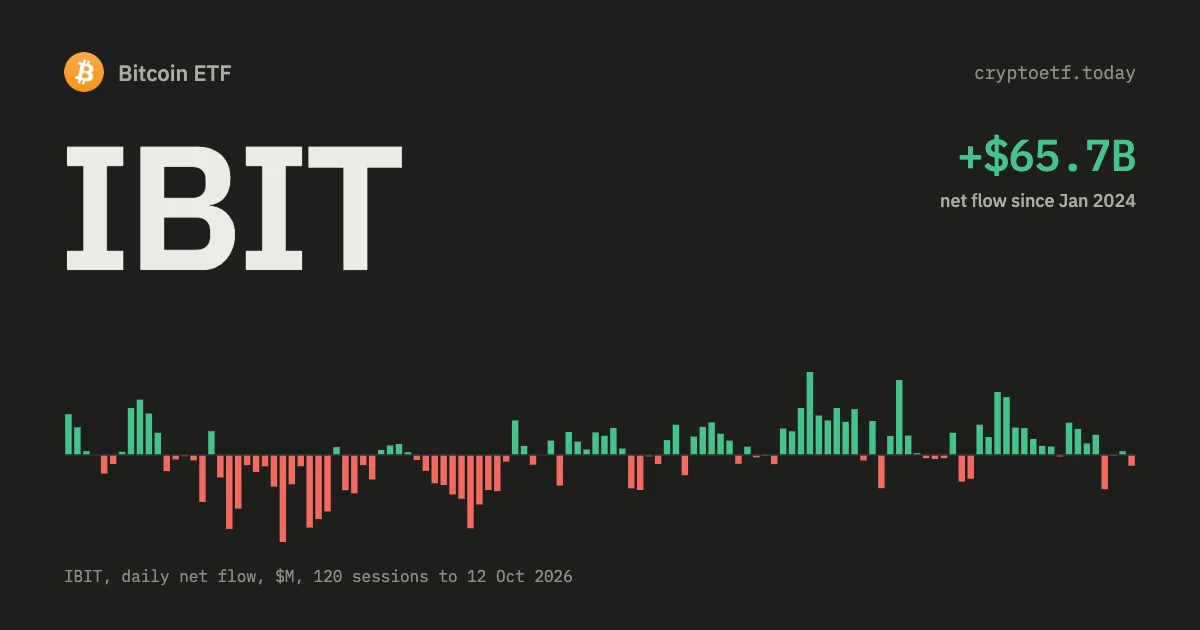
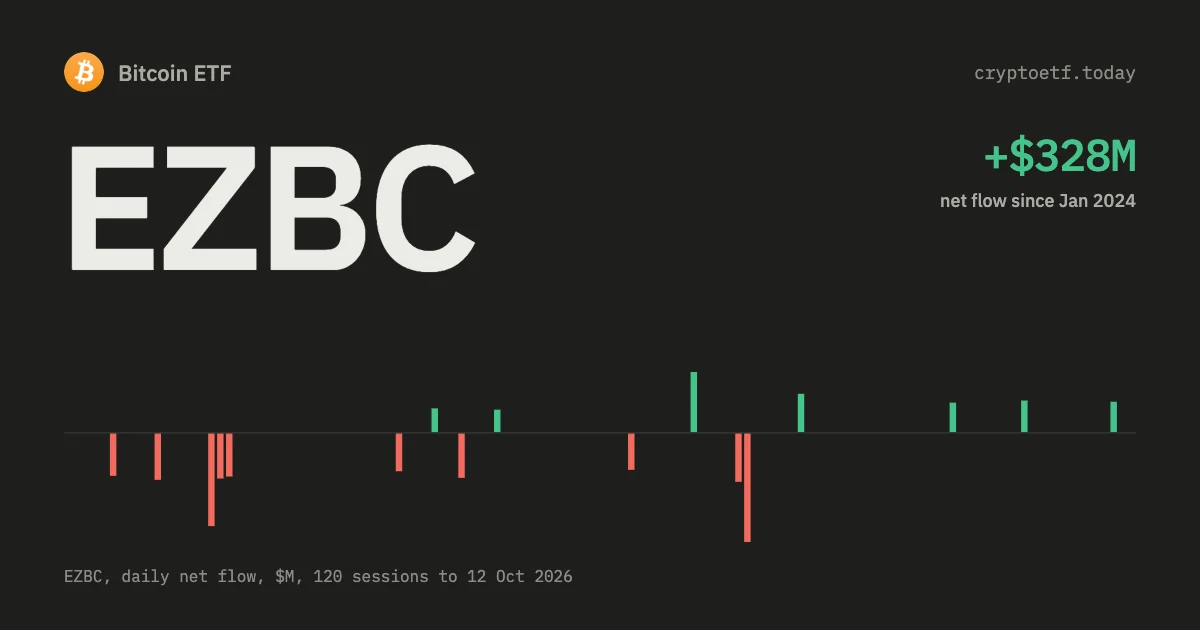
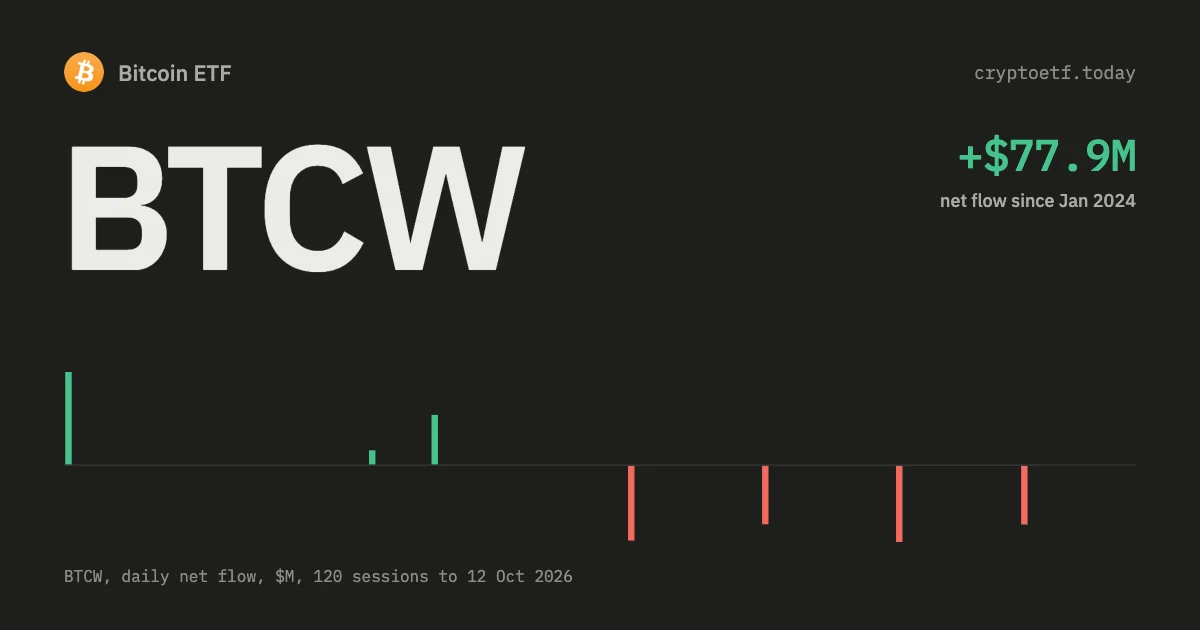
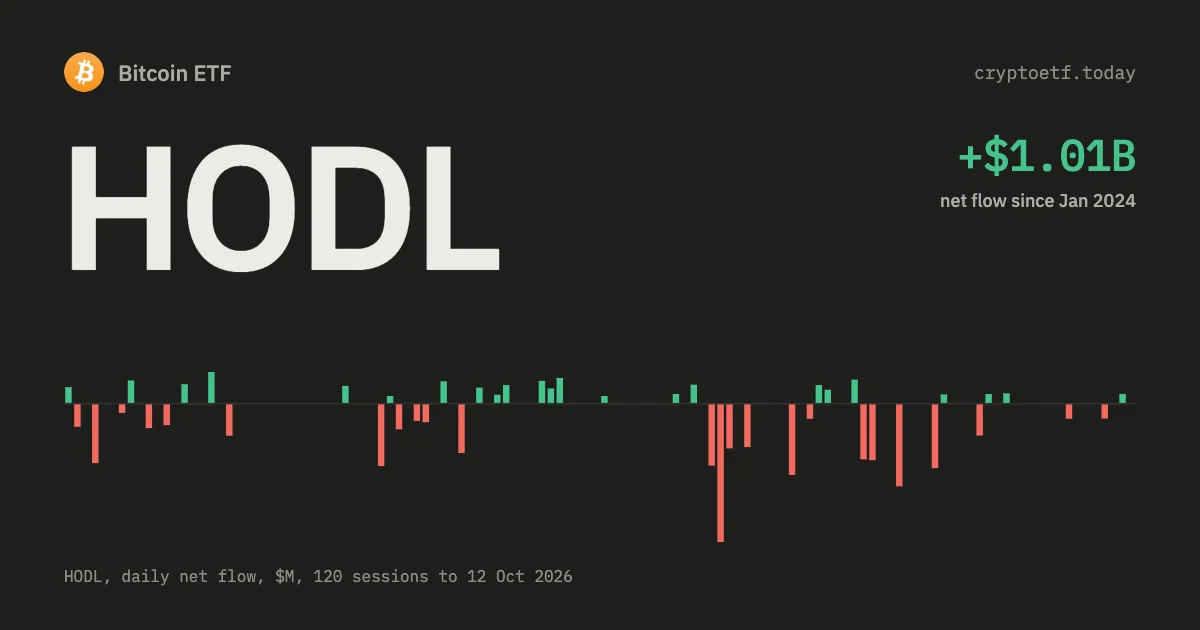
Three issuers in the table also run US spot Bitcoin ETFs. BlackRock runs BUIDL and IBIT. Franklin Templeton runs BENJI and EZBC. WisdomTree runs WTGXX and BTCW. VanEck has a smaller tokenized fund, VBILL ($58m), next to HODL.
The two businesses point in opposite directions. A spot ETF takes a crypto asset and puts it into a traditional wrapper, so it can sit in a brokerage account. A tokenized fund takes a traditional asset and puts it onto a blockchain, so it can sit in a wallet. The site adds tokenized-asset flows to ETF and stablecoin flows in the Wall Street Money Index.
Tokenized Treasury fund or T-bill ETF?
For most investors the ETF is the better choice, because they can buy it and because the yield is no higher on a blockchain. The tokenized version earns its place in narrower cases: a stablecoin holder who wants Treasury interest without going back to a bank, a trading firm that needs collateral able to change wallets on a Sunday night (subscriptions and redemptions still follow the issuer’s dealing days), or a protocol that has to prove its reserves on chain.
The risks are the fund’s usual ones plus a few new ones: the smart contract, the blockchain it runs on, and the whitelist that decides who can hold the token. If you lose access to an approved wallet, you’ll have to go through the issuer’s process to get your shares back. The legal form also decides what you own if the issuer gets into trouble. A BUIDL or BENJI token is a share in a fund. USDY is a debt of its issuer, which Ondo’s launch post describes as senior debt secured by Treasuries and bank deposits, so its holders are secured lenders.
Daily totals, flows, 7-day yield and holders are on the tokenized Treasuries page; every issuer’s products are on the issuer list, and gold, stocks and credit on the tokenized assets overview.
FAQ
What are tokenized Treasuries?
They are shares of funds, or notes, that hold short-term US government debt, with ownership recorded as tokens on a public blockchain. The fund earns Treasury interest and passes it to token holders. On 25 November 2026 there were 63 such products worth $14.40bn in our data.
What is the largest tokenized Treasury fund?
By value on 25 November 2026 it was Ondo Finance’s USDY at $2.38bn, followed by Circle’s USYC at $2.12bn and Franklin Templeton’s iBENJI at $1.65bn. BlackRock’s BUIDL was fifth at $1.31bn after losing $617m over the previous 30 days.
Can I buy BlackRock BUIDL?
Probably not. BlackRock’s launch release says the BUIDL fund is offered under Rule 506(c) and Section 3(c)(7), which limits it to qualified purchasers. The release set a $5 million initial minimum, while the fund’s SEC Form D lists $100,000. Subscriptions go through Securitize. Our data showed 93 holder addresses on 25 November 2026.
Are tokenized Treasuries the same as yield-bearing stablecoins?
No. A dollar stablecoin aims to stay at $1.00 and pays holders nothing. A tokenized Treasury fund passes the interest on, through a rising token price or new tokens, and is structured as a security with eligibility checks.
Is a tokenized Treasury fund safer than a stablecoin?
The assets are similar, short-term Treasuries, so the credit risk is similar. The structure is different: a registered fund like Franklin’s FOBXX sits under fund regulation, while a stablecoin depends on its issuer’s reserve rules. Both carry smart-contract and blockchain risk on top.
What happens to my tokens if the issuer fails?
It depends on the legal form. BUIDL and BENJI tokens are fund shares, so you hold a slice of the fund. USDY is a note: you are a lender to the issuer, and Ondo describes the note as senior debt secured by Treasuries and bank deposits. Which court and which rules apply depends on where the fund or issuer is set up.
Why do tokenized Treasury totals swing so much?
Because a few holders own most of the money. In the 30 days to 25 November 2026, $1.27bn more was redeemed than issued, and four products did all of it: BUIDL (−$617m), JTRSY (−$302m), USYC (−$265m) and BENJI (−$161m). Several large funds have fewer than 100 addresses.
Sources and further reading
- BlackRock, “BlackRock Launches Its First Tokenized Fund, BUIDL, on the Ethereum Network” (20 March 2024), nasdaq.com; BlackRock USD Institutional Digital Liquidity Fund Ltd., Form D/A (July 2026), sec.gov.
- Franklin Templeton, Franklin OnChain U.S. Government Money Fund (FOBXX): fund page and summary prospectus (August 2026), sec.gov.
- Franklin Templeton and Stellar Development Foundation, five years of BENJI (2026), franklintempleton.com.
- Ondo Finance, “Introducing Ondo USD Yield (USDY)” (3 August 2023), ondo.finance; USDY documentation, docs.ondo.finance.
- Spiko, T-Bills EUR fund page, spiko.io.
- On cryptoetf.today: tokenized Treasuries, tokenized asset issuers, stablecoins. Figures in this article are as of 25 November 2026.
For information only. Not investment advice.
 BTC
 ETH
 SOL
 XRP
 HYPE
 LINK
 HBAR
 AVAX
 DOGE
 LTC
 SUI
 DOT
 BNB
 NEAR
 TRX
 ZEC